3D · Game Design · Animation
Scout’s Well
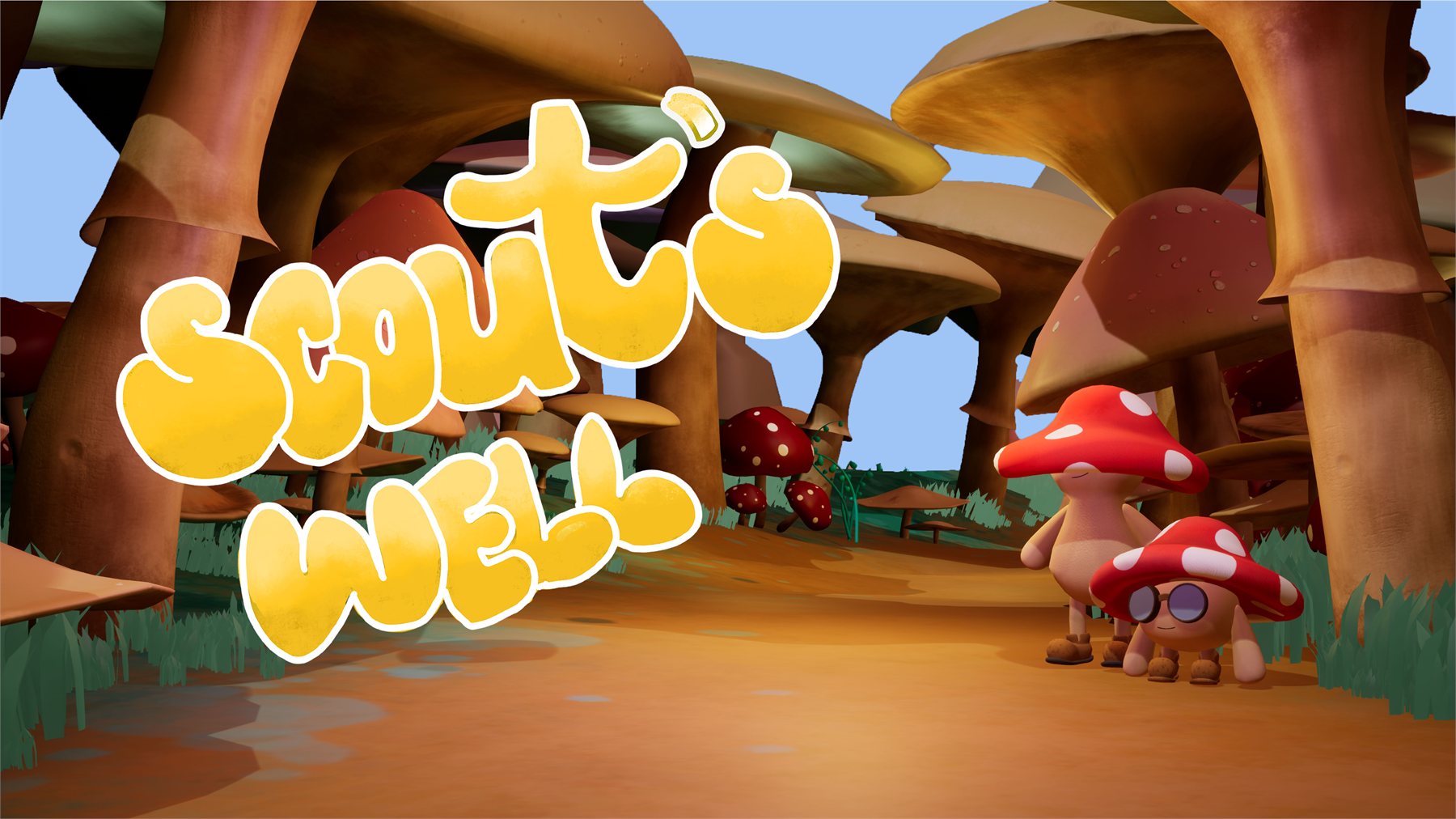
A 3D platformer about a mushroom who goes down a well after his brother. Built as my senior thesis at the Fashion Institute of Technology with Fernando Rojas.
Background
Fernando and I went to community college together and then to FIT, so we came in with the same fundamentals and the same interests. For our senior thesis we built a 3D platformer, taking everything from four years of coursework and putting it into one project.
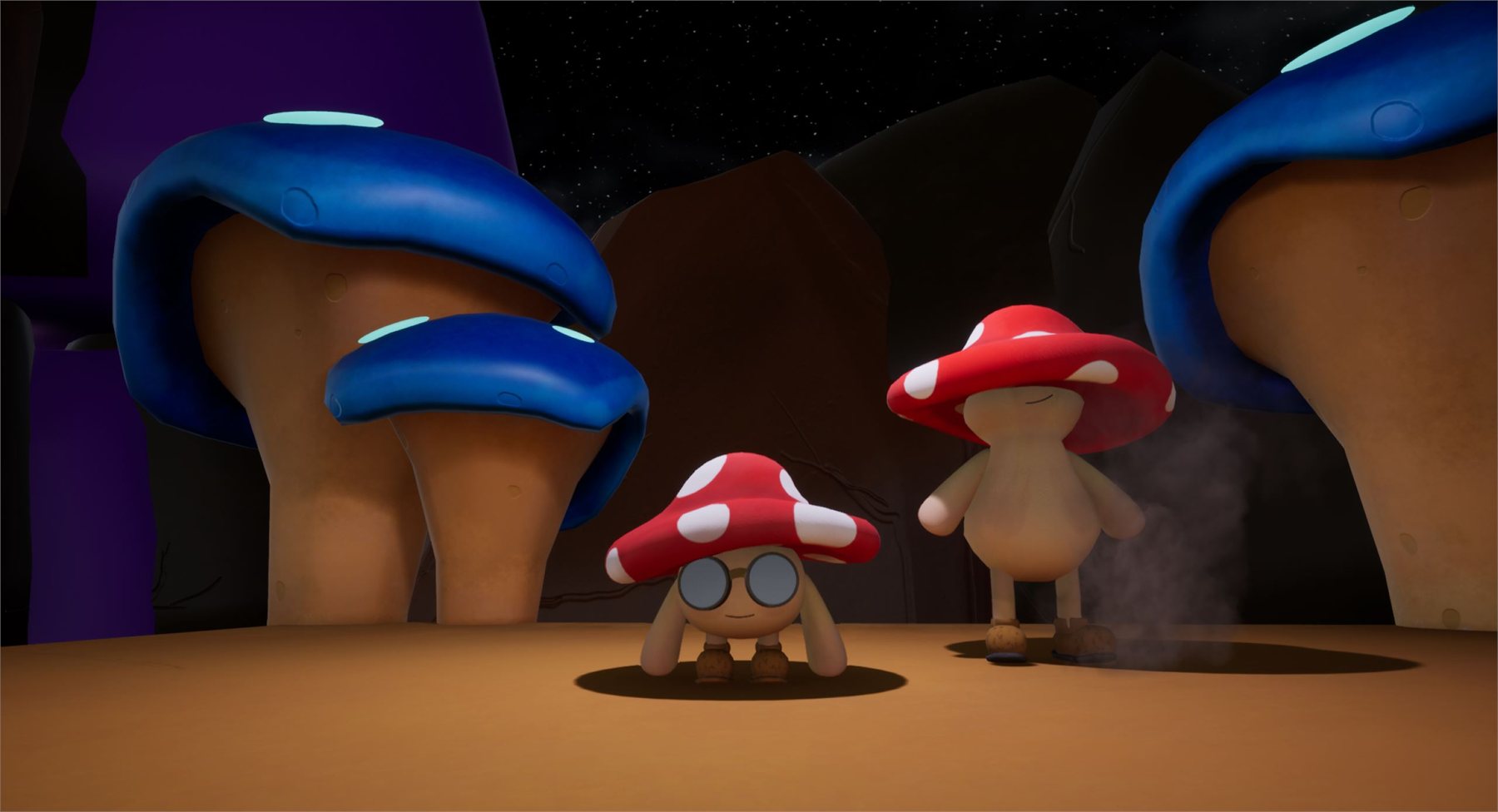
Scout and his brother Theo are playing hide and seek when Theo goes down a well, and the game follows Scout after him. We built it for a younger audience, and wanted the player to be the younger brother taking on a solo adventure to find him.
The Challenge
Our school went fully remote in the final stretch. Until then we had a routine that worked. We merged the project together during lab hours, and used that time to agree what each of us would have finished by the following week, or to research whatever we were about to run into.
Going remote took the merge, the planning and the research away at the same time.
Approach
Dividing the work
We split it along what each of us wanted to get better at. I took character modelling, rigging, UV mapping and animation, plus the underground level and its puzzles. Fernando took asset modelling, texturing, the above-ground layout, the crystal maze, rendering and camera work, and the rest of the concept art and logo design.
Scout's original concept art came from our classmate KC, and the grandpa character from Dillon O'Keefe.
The underground
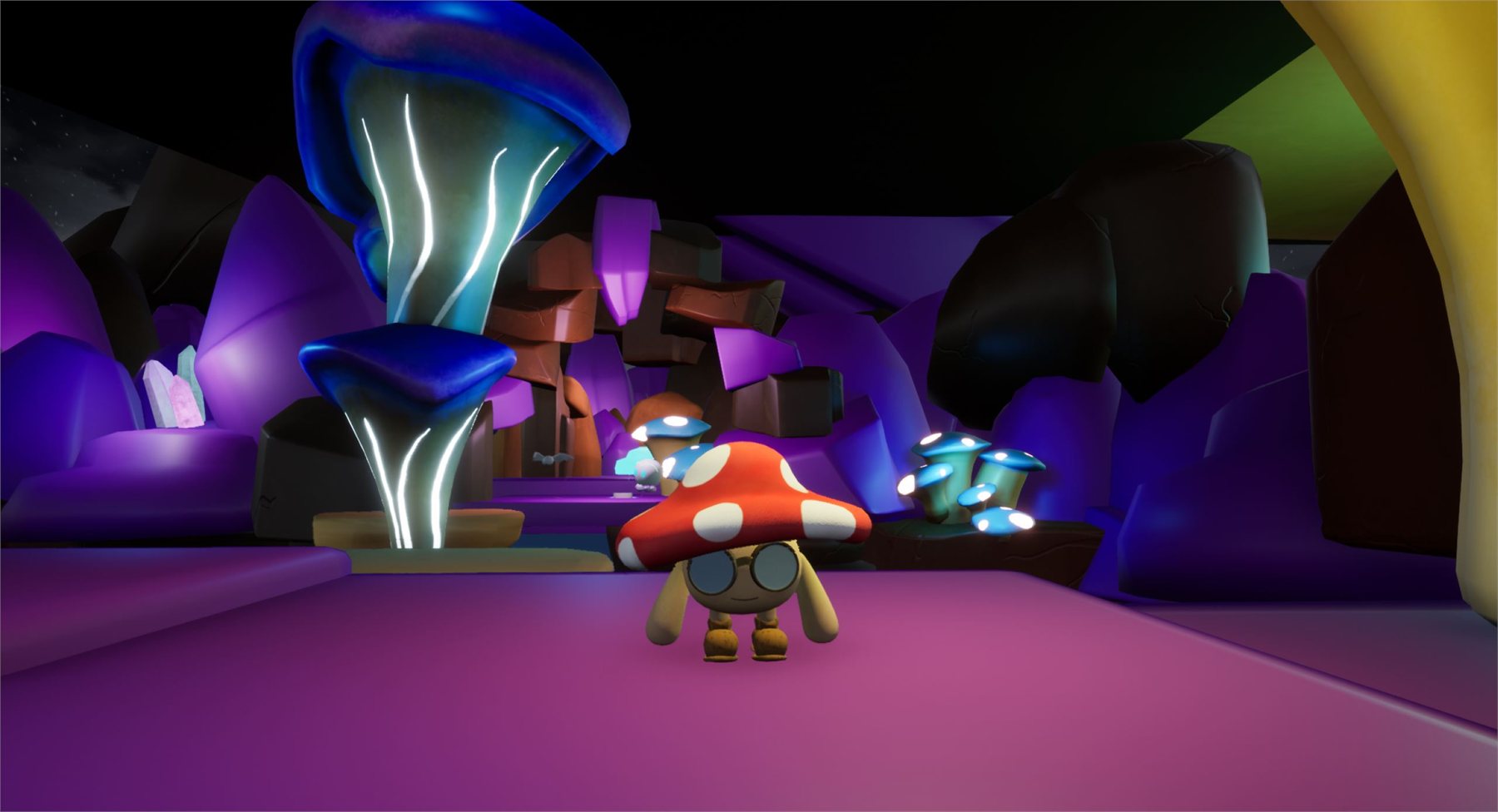
My half of the world starts once Scout goes down the well. I laid out the caves and built the interactions in them, which meant the level had to teach you what it wanted without stopping to explain.
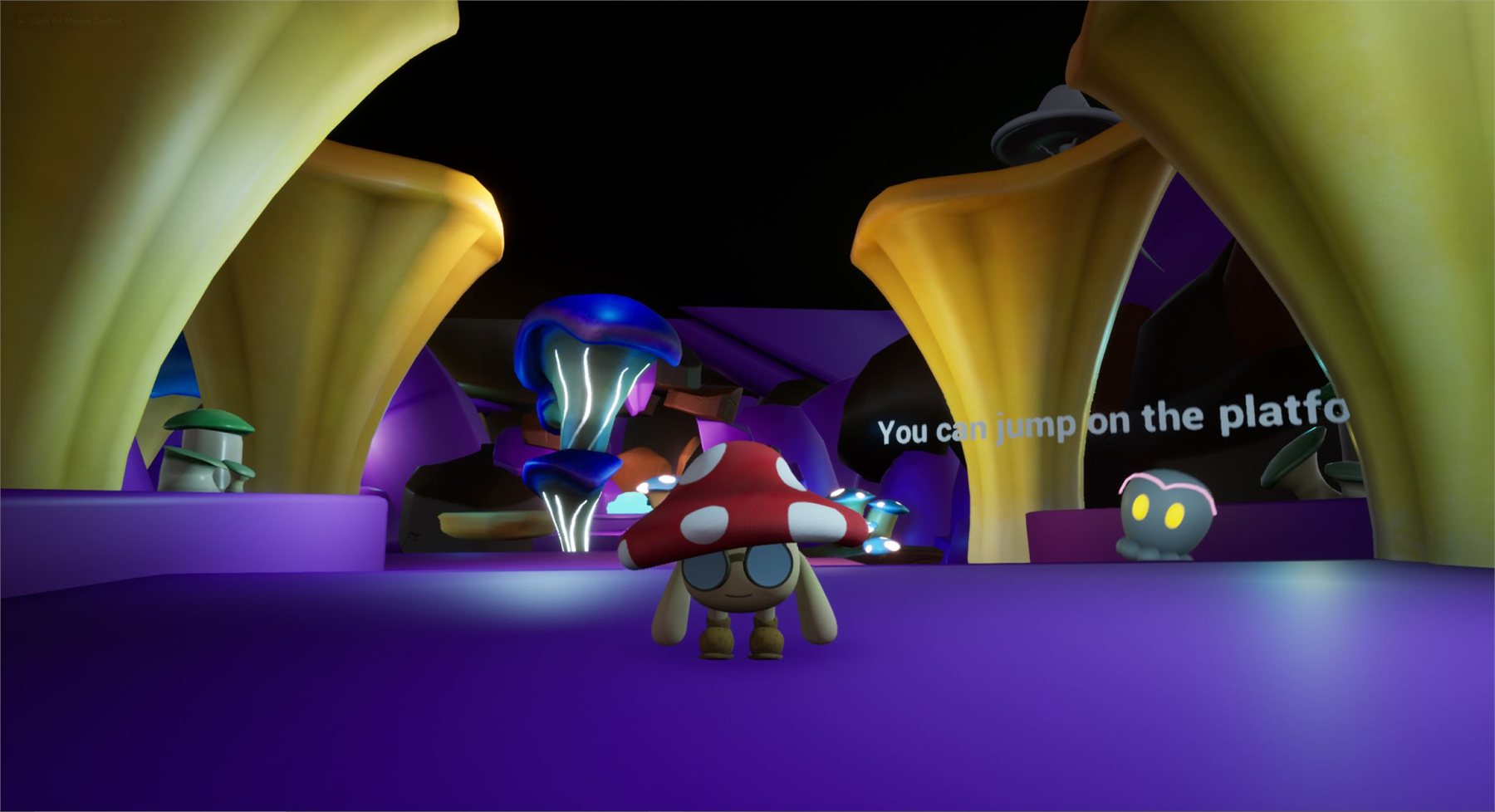
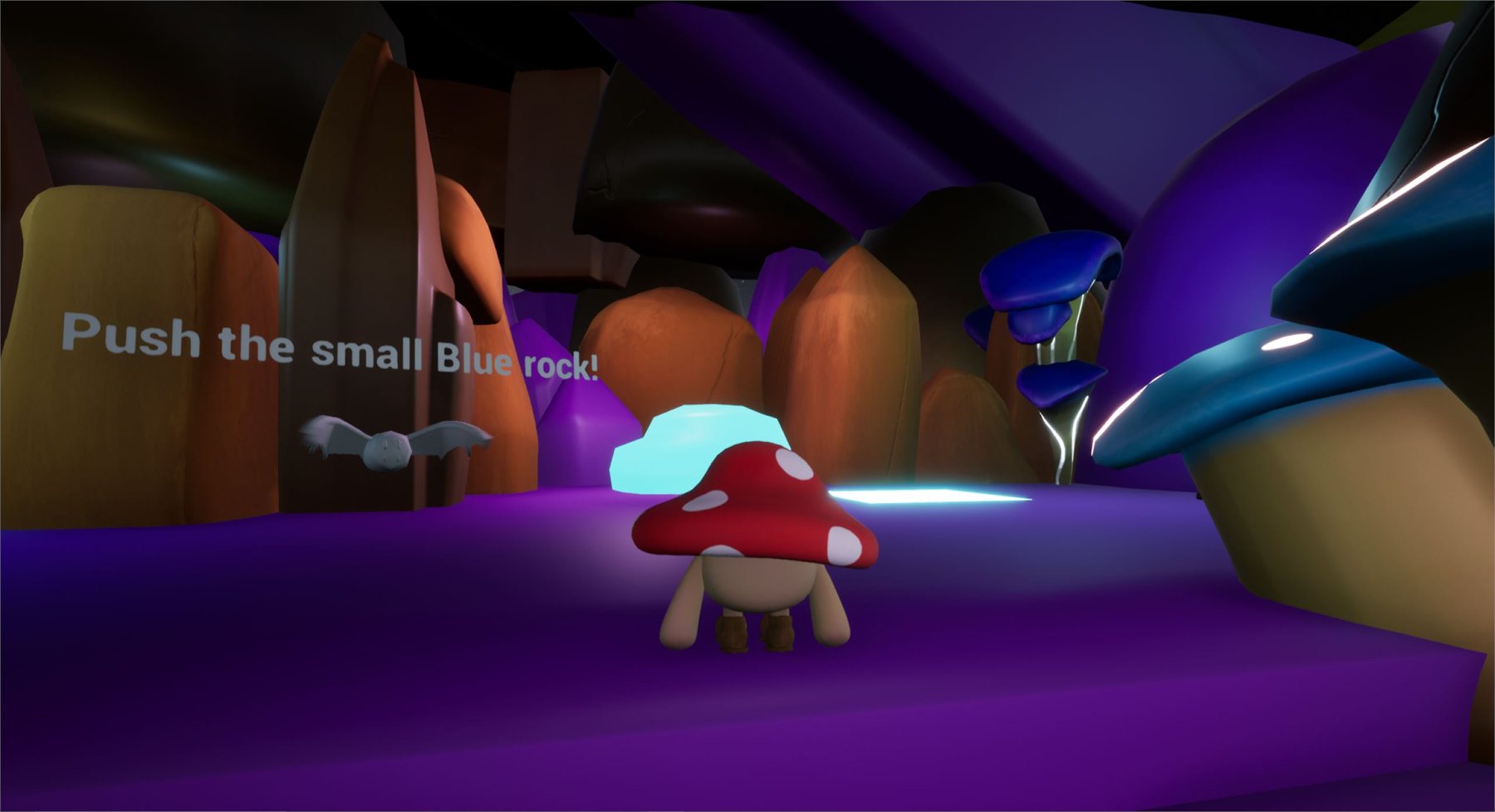
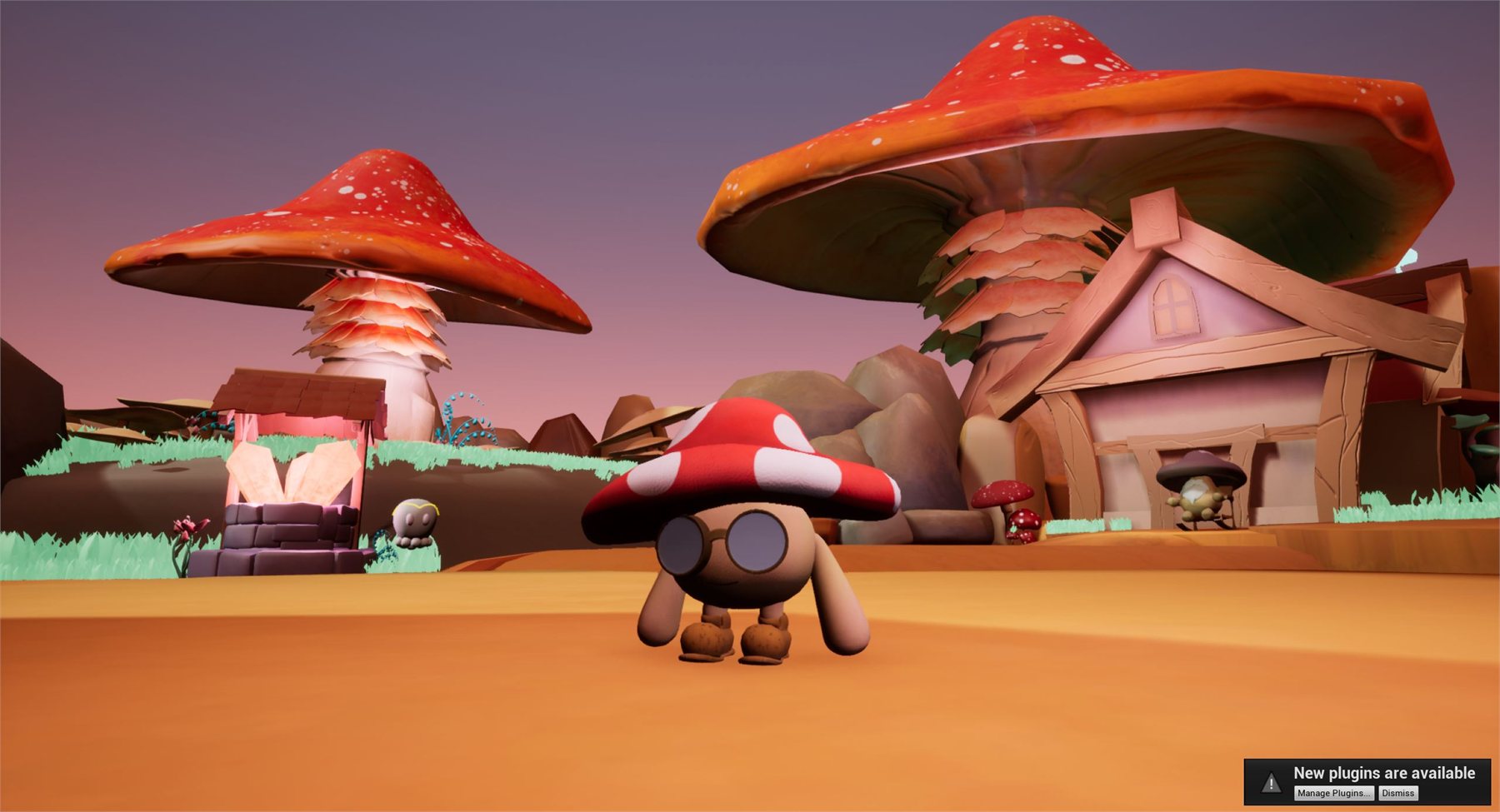
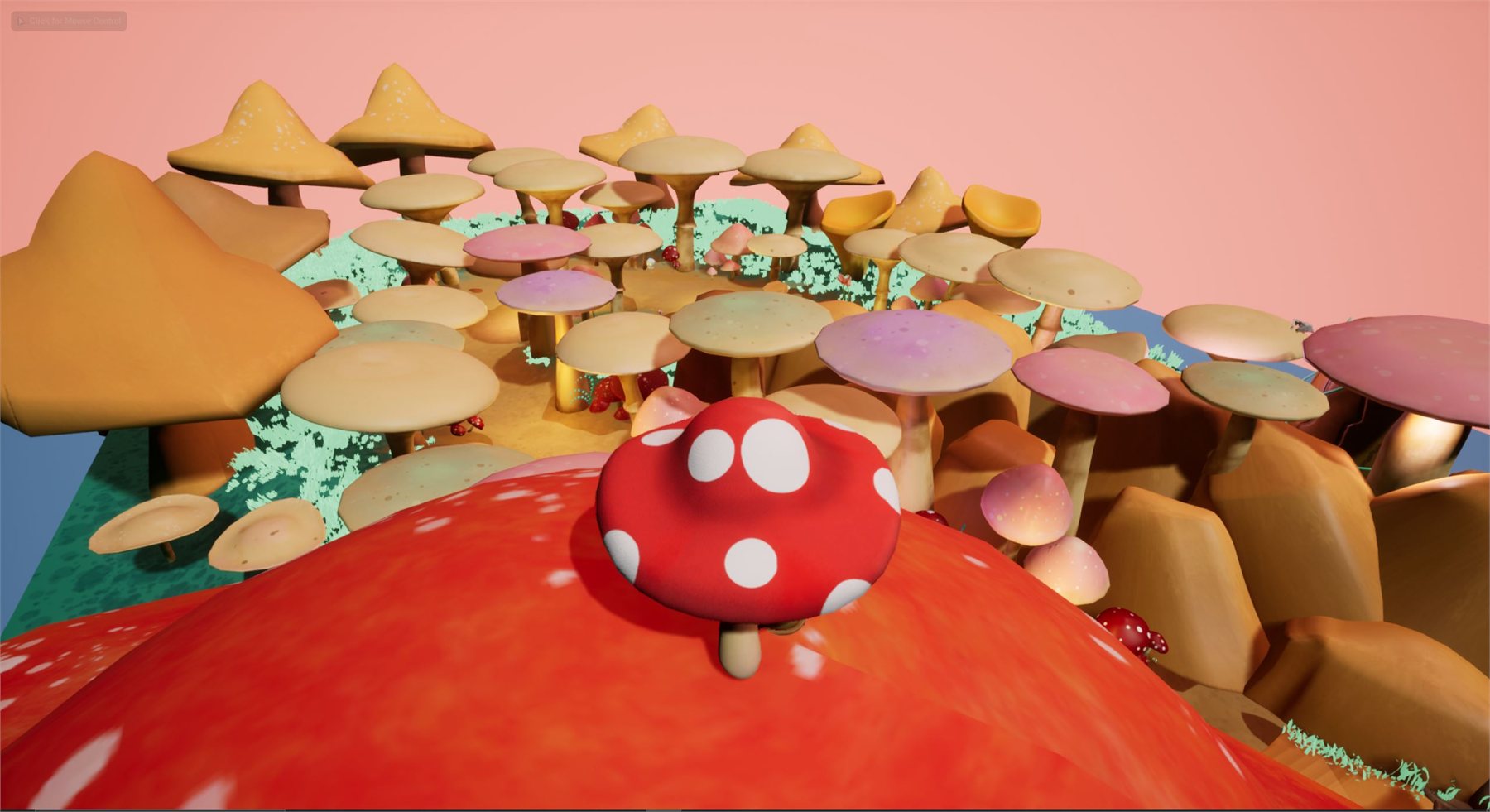
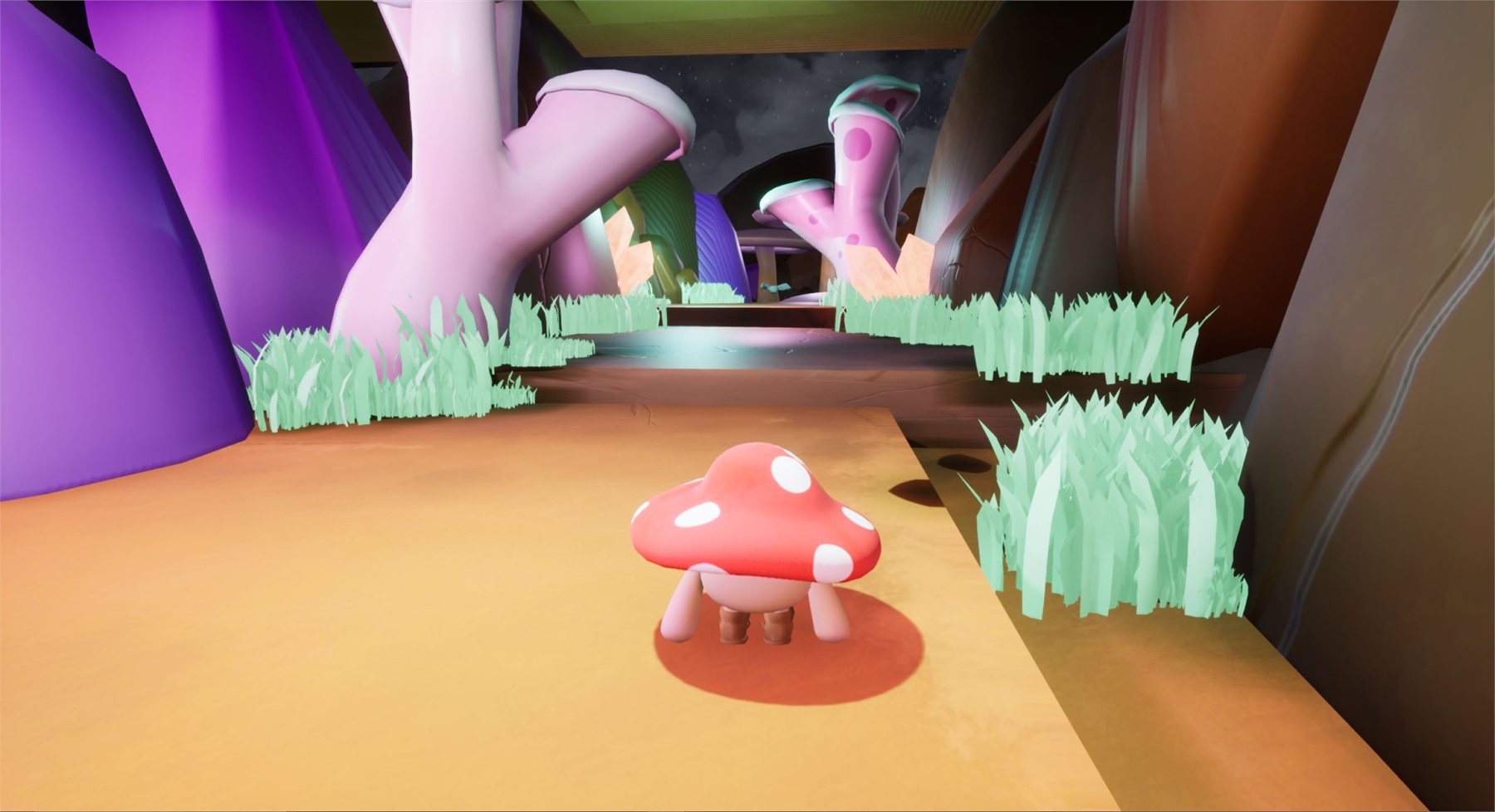
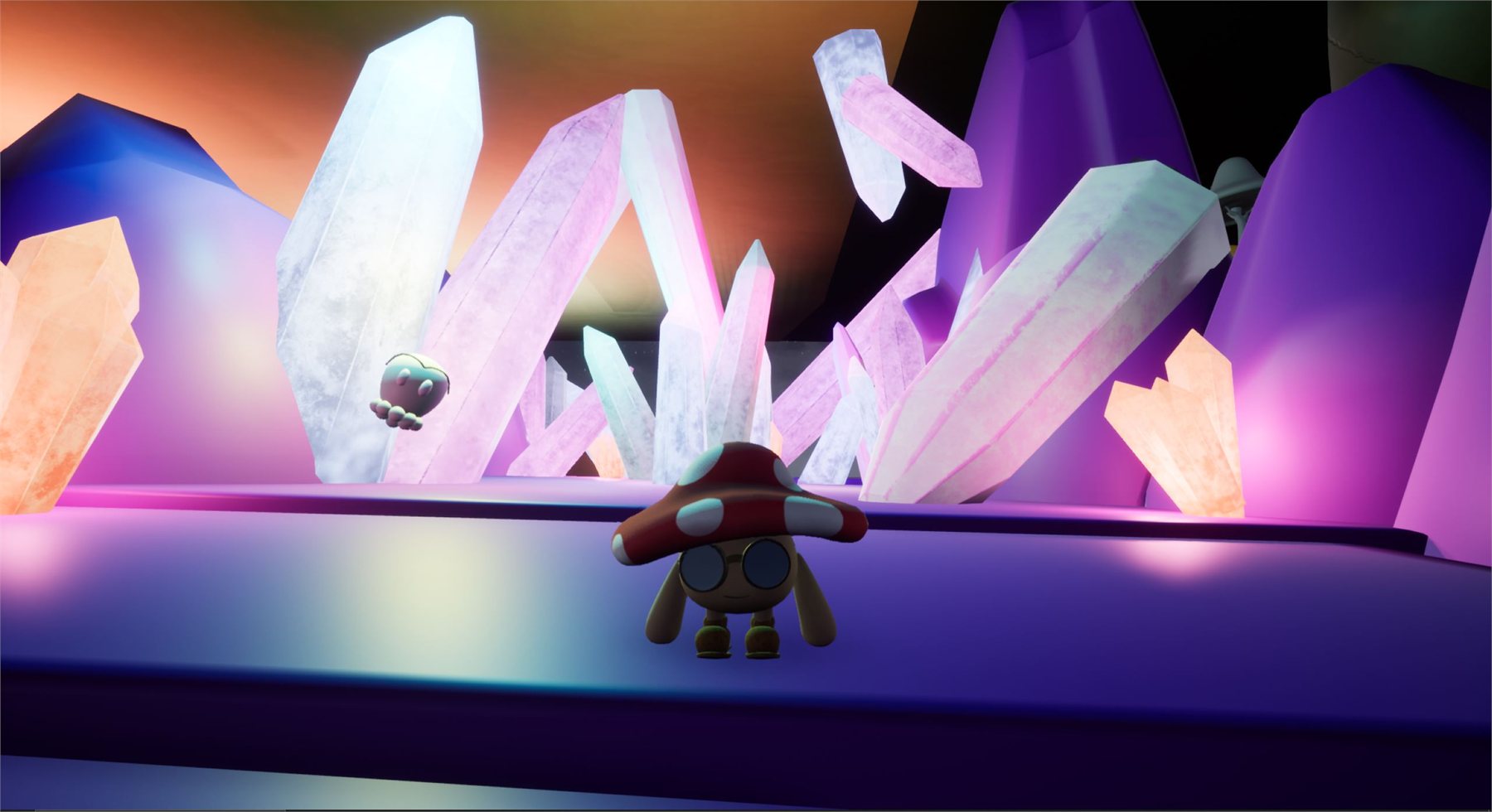
Colour did most of the navigation. Above ground is warm orange and red; underground goes cool purple and blue, lit by glowing mushrooms and crystals. You always know which half of the game you are in.
Problems worth naming
Scout could walk up walls he had no business walking up. Rebuilding the geometry would have cost more than we had, so I swapped the collision meshes for invisible walls instead.
Getting him to move properly between states was the longer job. Idle, walk and jump each existed as separate animations and cut between each other. Blend spaces solved it, and that was the point where the character stopped reading as a set of clips and started reading as one thing moving.
We also ran the project on critique. Advisors and classmates played it and told us the jumping platforms were overused, that obstacles needed breathing room, that the camera broke in the tree elevator, and that rocks were floating in corners. Most of the last month was that list.
Looking back
It was by a distance the largest thing either of us had built. We were splitting a whole game between two people, with a shared character, a shared engine, and two levels that had to feel like the same world.
Outcome
We finished it, and it holds together. Two levels, a rigged and animated character, a set of puzzles, and a trailer.
It was part of FIT’s 2020 Graduating Student Exhibition, and spent time on display at the FIT museum.
It is still the project I learned the most on, largely because nothing about it was a solved problem when we started.
Made with Fernando Rojas. Concept art for Scout by KC, and for the grandpa character by Dillon O'Keefe. Above-ground layout, asset modelling, texturing, the crystal maze, rendering and camera work are Fernando's.