UX Design · Mobile App · Branding
DropPin
A personal project. My best friend moved far away, and meeting in the middle always turned up the same two options: a restaurant, or a small town with a main street. DropPin finds something to actually do between two locations.
Background
Existing tools solve half of it. What's Halfway and Meetways both find the point between two addresses, then hand you food, coffee, and hotels. They are literal, and they stop there.
The rest of the gap showed up closer to home. A brewery in my town ran a murder mystery night and posted it to their Facebook and Instagram. Visiting for the first time, I would never have known it was happening. Local events live on the business's own accounts, and you only see them if you already follow the business.
The Challenge
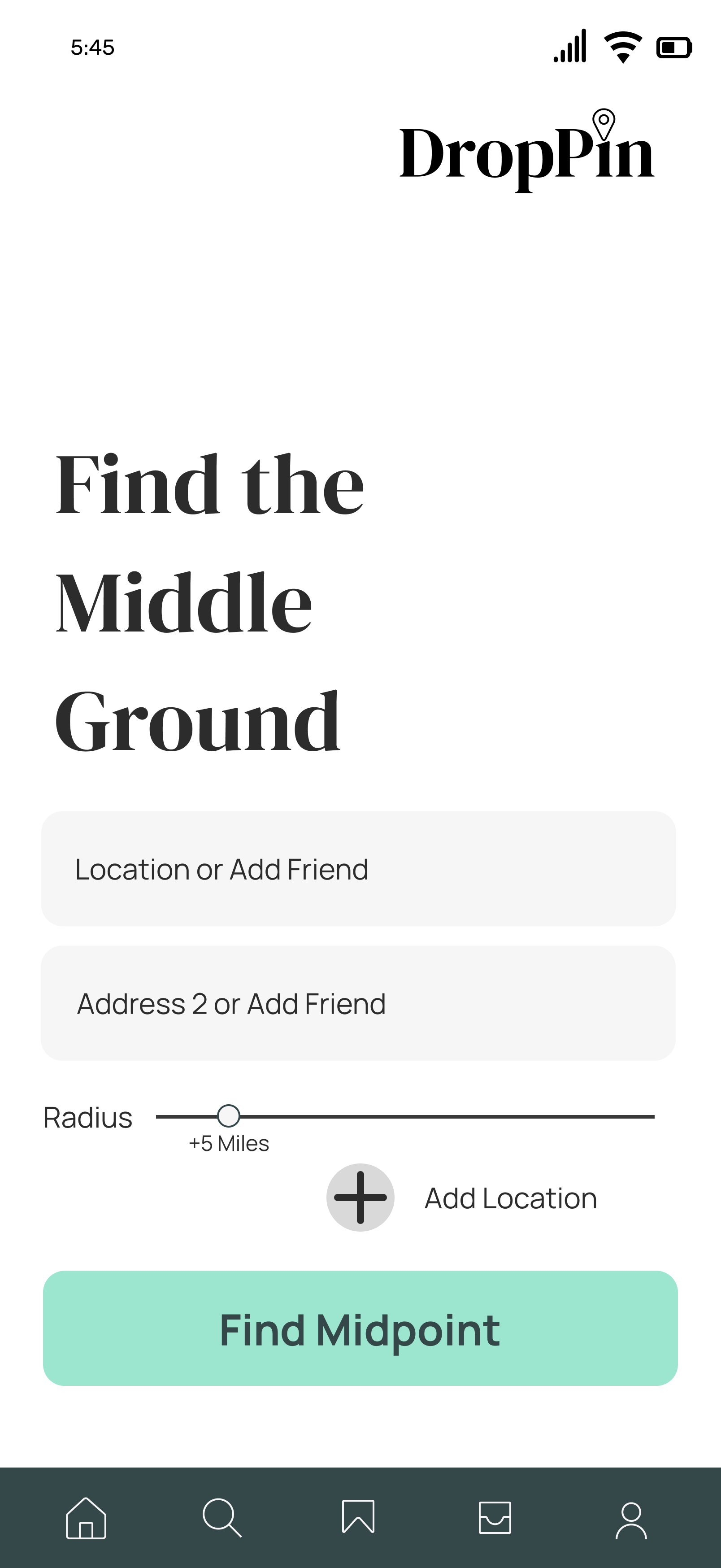
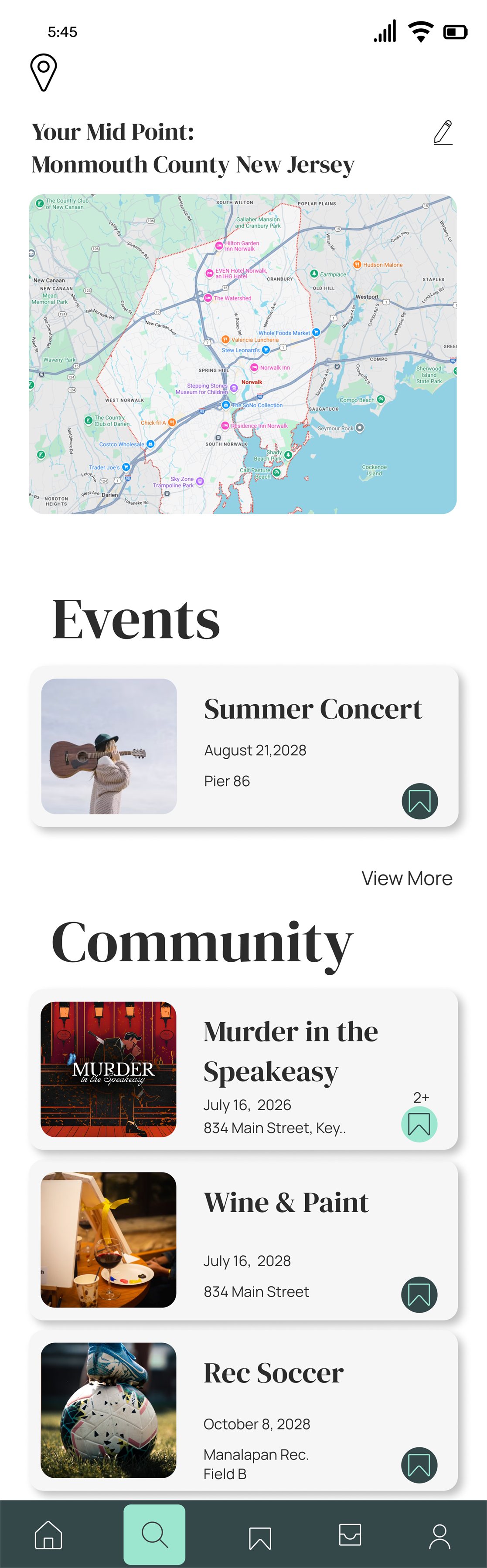
The existing apps were direct, and that was the useful thing about them. I built the two screens that carried the idea first: find the midpoint, and a map with what is happening around it. A rough flow chart came after.
Early on I got pulled into designing a full login experience. I cut it back. The app answers a short question, which is what is halfway, on what date, and what is on there at that time. Everything else could wait.
Approach
The system underneath
Two typefaces, four colours, and a set of components reused across every screen: the event card, the saved and search states, the nav bar, the toggles. Building those once kept the business screens and the group screens from drifting apart.
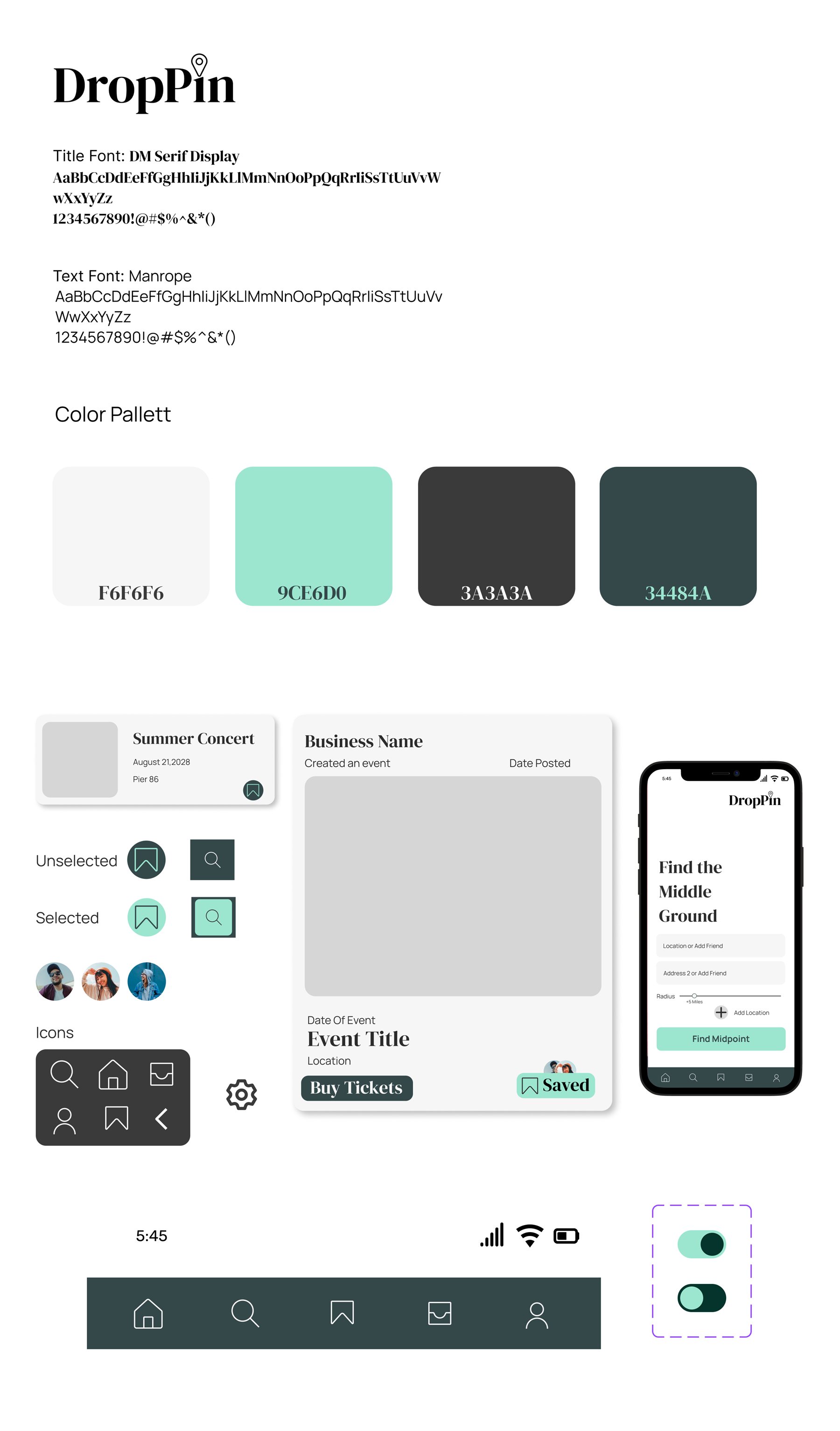
Finding the midpoint
You enter two addresses or pull in a friend, set a radius, and add more people if the plan grows. It starts with two and expands from there.
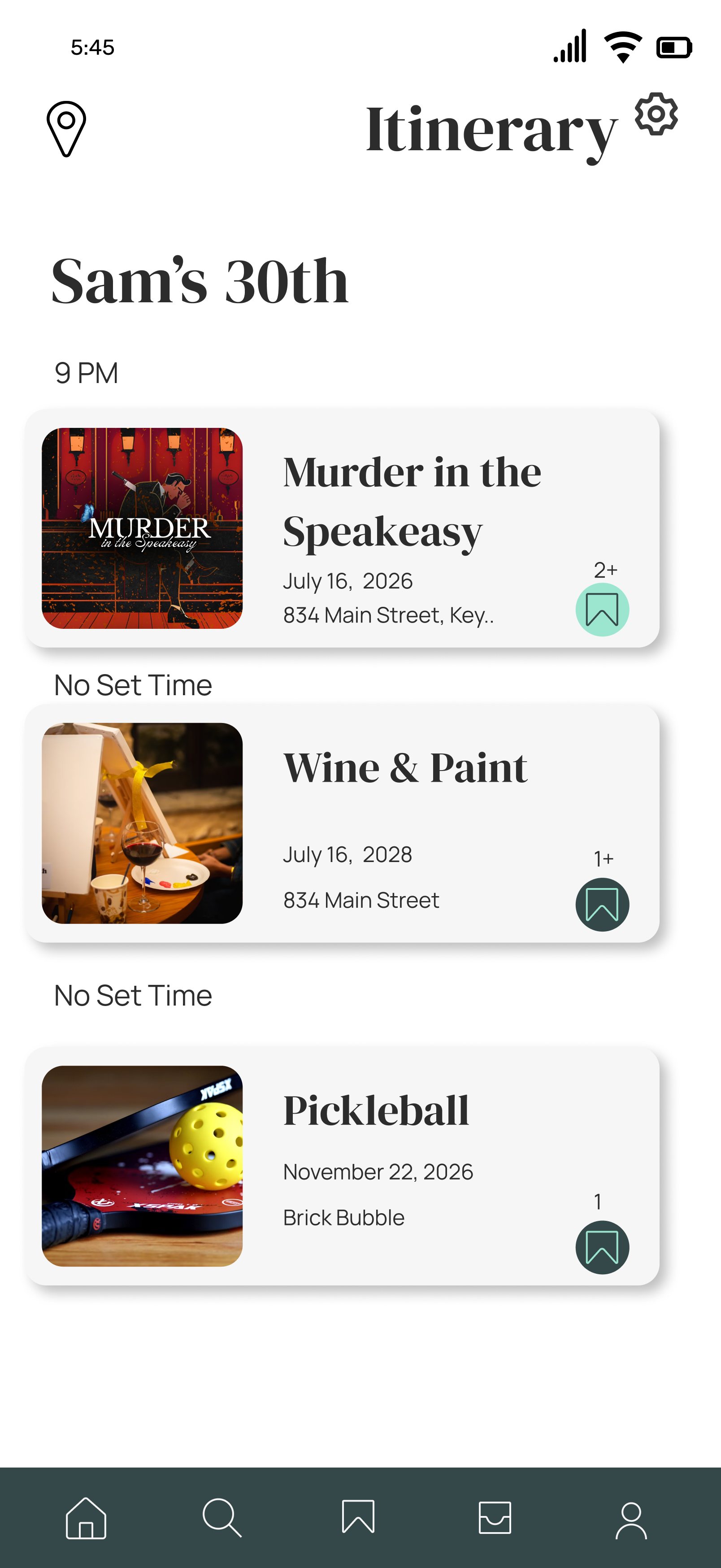
Results cover the open and ticketed events you would find on something like Meetup, alongside the local listings that never make it that far: the murder mystery night, wine and paint, rec soccer.
Connecting the businesses
This is the part I was happiest to add.
A business links their Facebook page once. From then on, the events they already post there appear on DropPin. Nothing to re-type, no second listing to keep updated.
They stay in control of what shows. Every event has a toggle, so anything they would rather not list can be switched off.
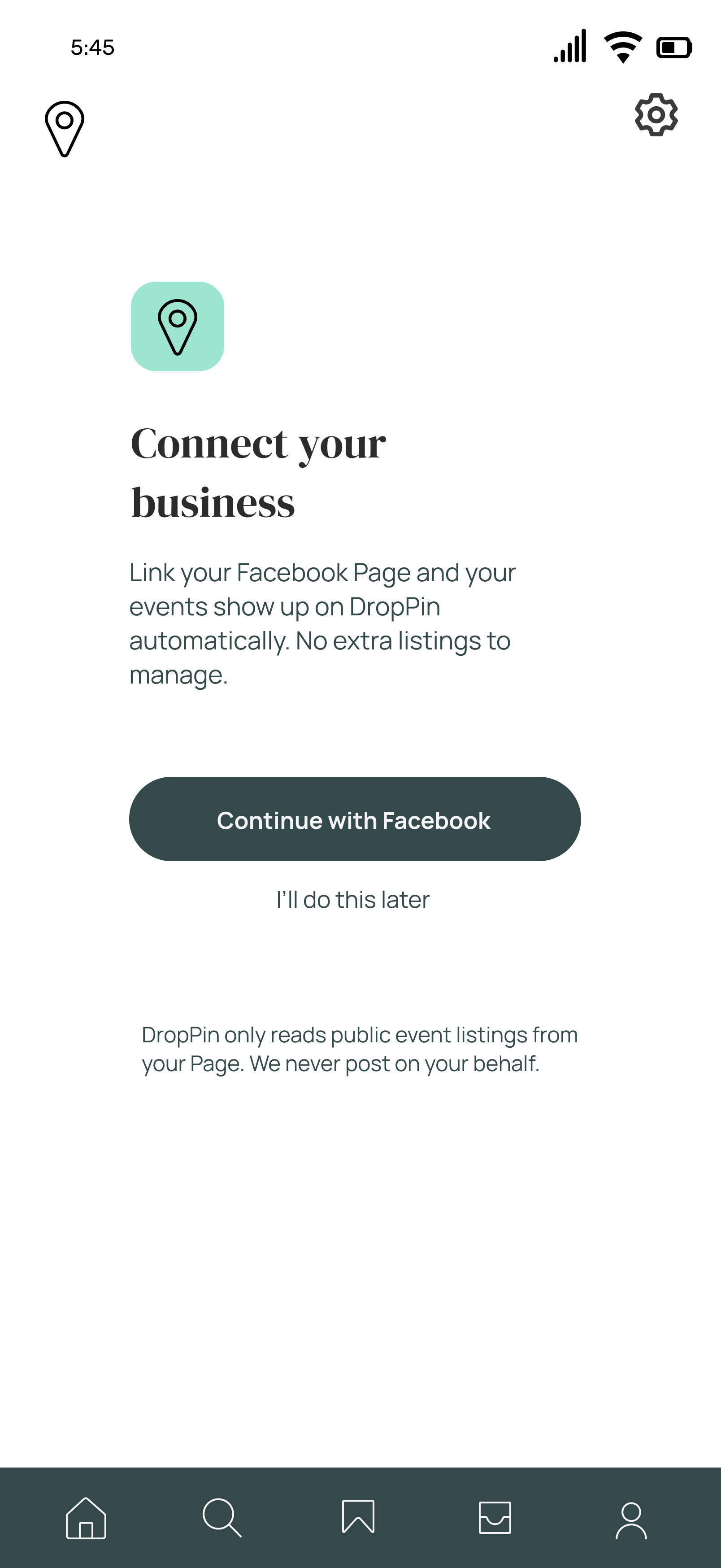
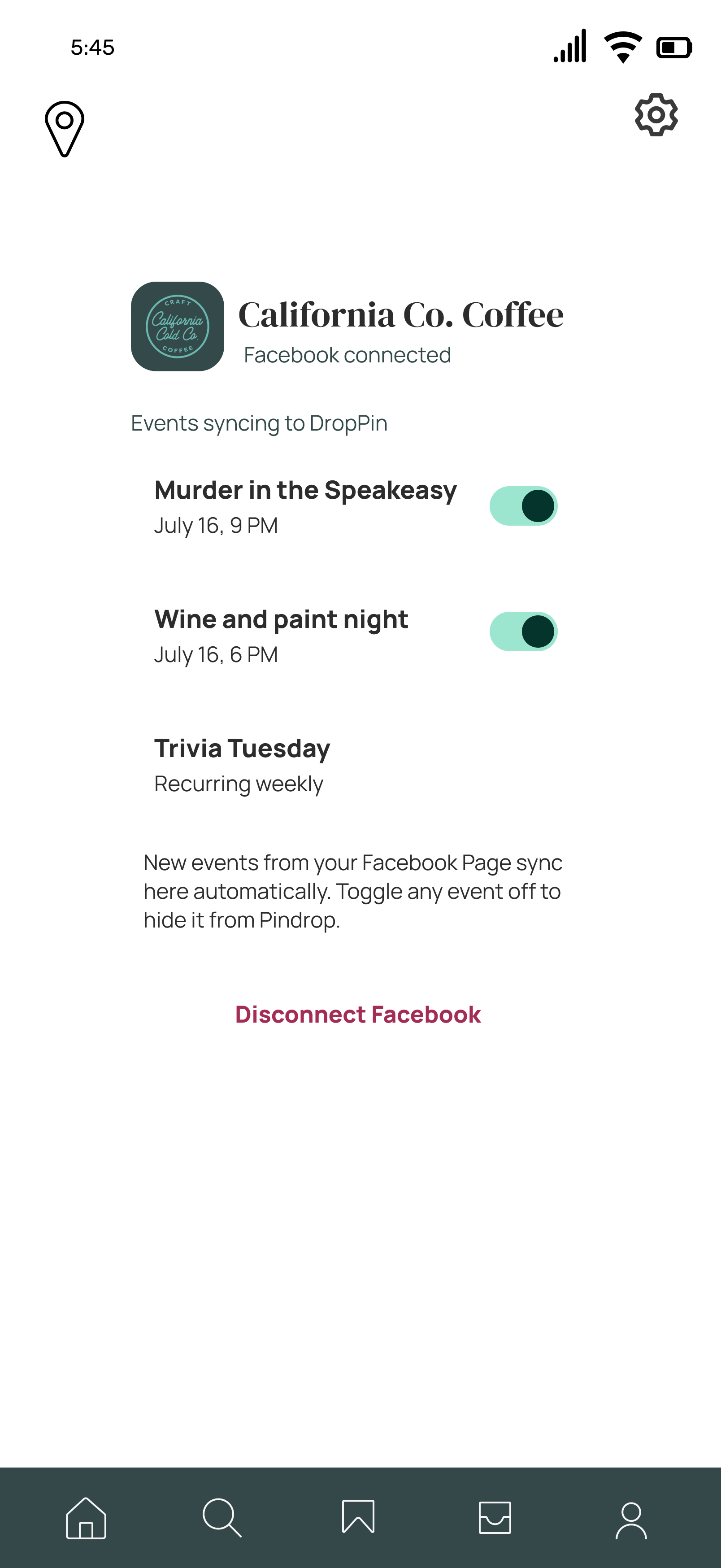
The connection only runs one way. DropPin reads their public listings and never posts anything to their page, and the permission screen says so before they connect.
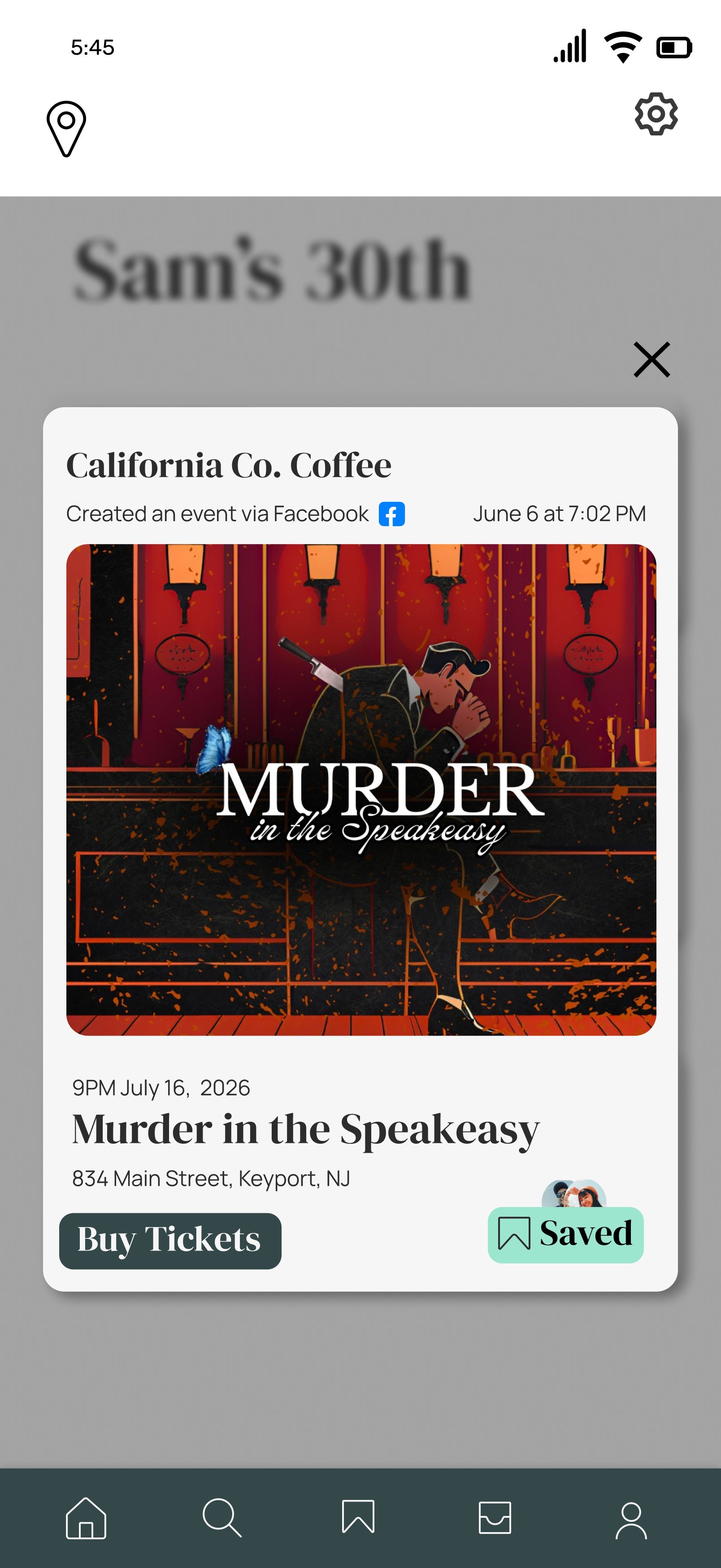
Planning it together
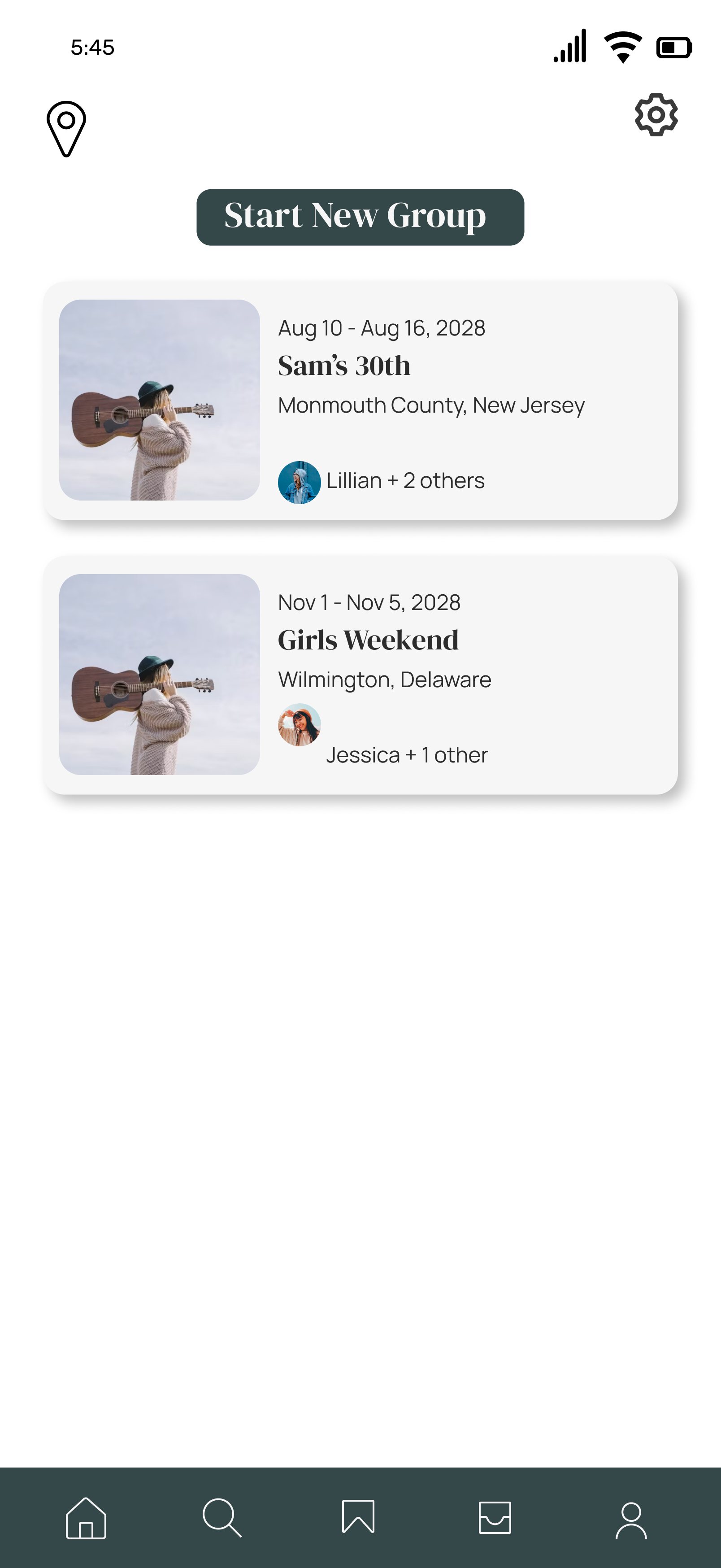
Once a group forms, the plan needs somewhere to live. Groups hold the people and the dates. The itinerary collects what everyone saved, with times where they exist and no set time where they don't.
Outcome
DropPin is a concept. I designed nine interfaces across both sides of it: the visitor working out where to meet and what is on, and the business listing what they already post.
The business flow is the piece I am most pleased with. A local venue running a one-off night gets it in front of people passing through the area, without keeping a second listing anywhere or learning another tool.
The scope outgrew a solo build. Designing both sides of a marketplace properly needs more than one person, and that is the point I took it to.